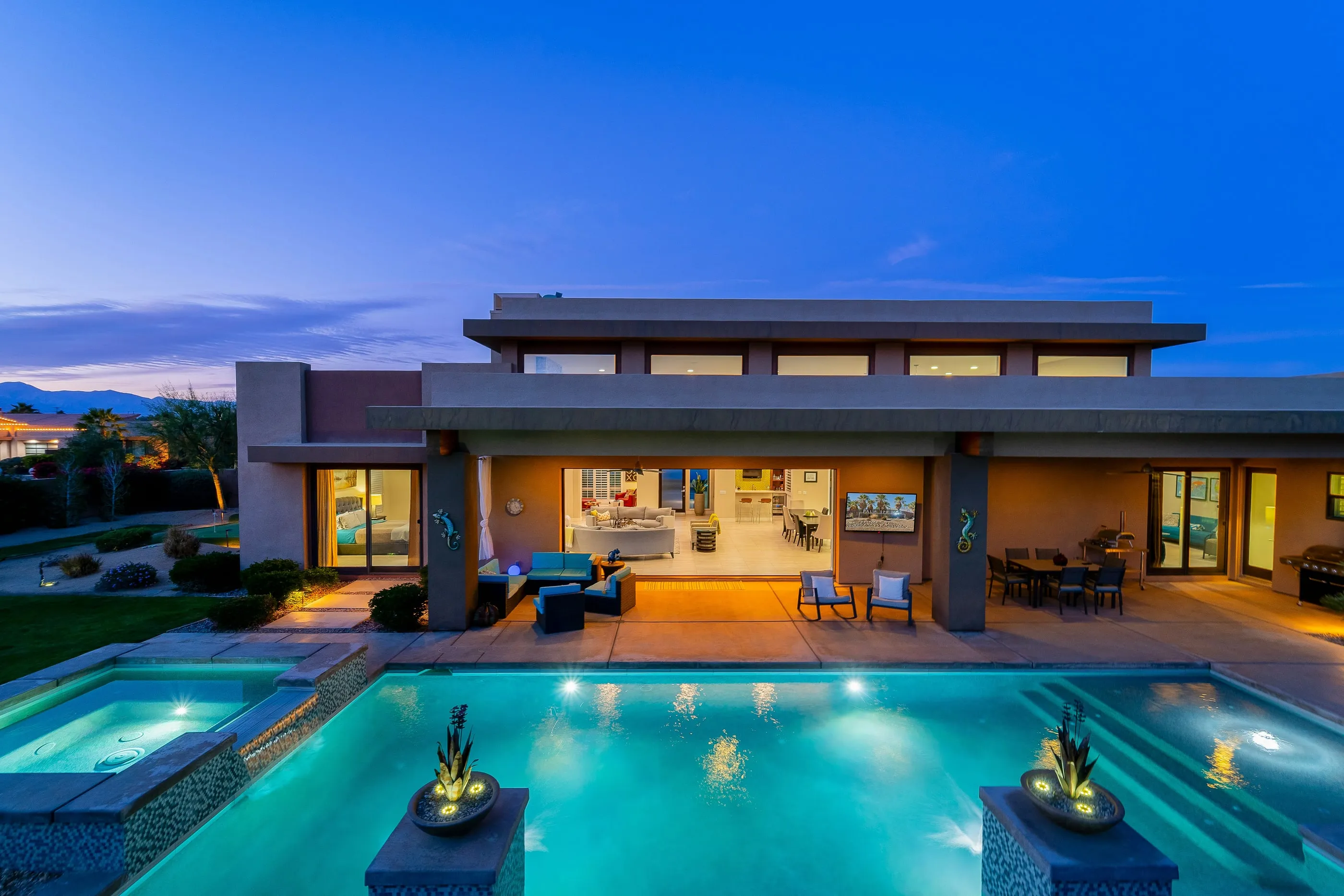
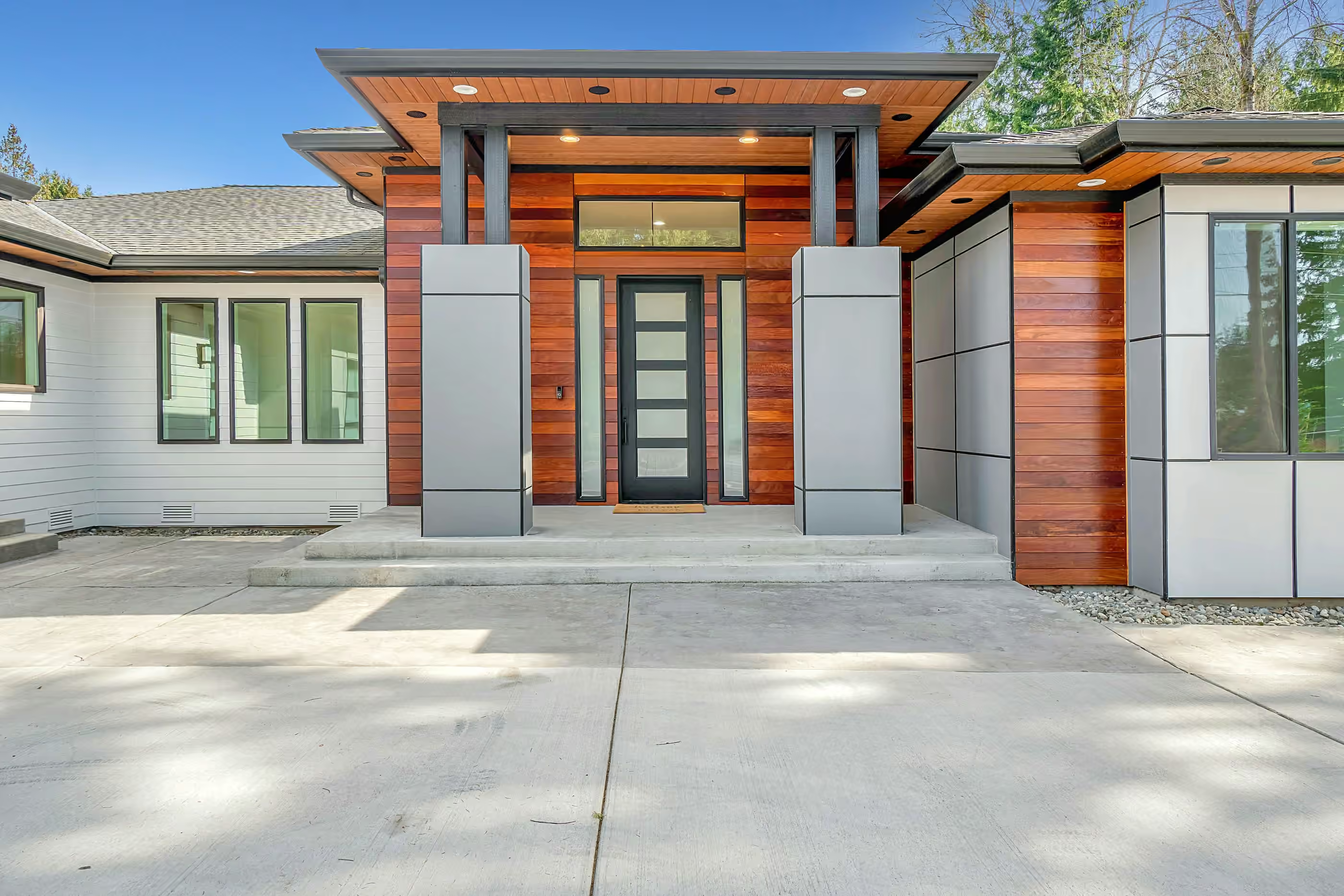
What is a custom entry door?
A custom entry door is built to your opening, not pulled from a catalog size. You choose how it opens, what it is made of, how much glass it carries, and how it locks. For a Dallas home, the right answer depends on the entry’s cover, its compass face and the look you want from the street.
Honey Rock Window and Door works with three manufacturers whose lines cover entry doors. Jada makes thermally broken steel doors in Grass Valley, California. Bertrand, in Luzino, Poland, offers entrance doors in steel, aluminum, wood and PVC. Sun Windows, in Owensboro, Kentucky, builds clad-wood in-swing and out-swing doors. Read about each on the partners page.
Should my entry door swing in, swing out or pivot?
Choose the swing by weather exposure and floor space. An inswing door suits a covered porch. An outswing door suits an exposed entry. A pivot door suits a covered entry where you want a large, dramatic panel and have room for the floor pivot.
| Type | Fits | Watch for | Who offers it |
|---|---|---|---|
| Inswing | Covered entries, familiar look | Sill is hard to weather seal | Jada, Sun, Bertrand (MB-100GFT supports inward opening) |
| Outswing | Exposed entries, tight interior space | Needs clear space outside | Jada, Sun, Bertrand (MB-100GFT supports outward opening) |
| Pivot | Wide or tall statement entries, covered | Raised threshold, limited exposure | Jada, Bertrand (COR Pivot) |
Jada says that “virtually all entry doors swing into the home.” It also says its inswing doors are often used for entry openings. A familiar inswing door works well when a porch or portico shields it from rain.
An outswing door has a different weather logic. Jada says the higher the wind blows, the tighter the door seals against its weatherstrip. That helps on an exposed face. The cost is exterior projection and a hinge plan, so check where the door swings before you place a planter or a railing.
A pivot door turns on a point near the center or edge of the panel, not on side hinges. Read how a pivot door works and the pivot door buying guide for hinge, weight and clearance detail. Our full pivot doors pillar covers the topic in depth.
What materials can a custom entry door use?
You can choose thermally broken steel, aluminum, wood-aluminum or clad wood, and PVC, depending on the maker. Each material sets the frame’s sightline, weight and finish. Match the material to the house style first, then to the exposure.
- Steel (Jada). Jada builds swing doors from narrow-sightline steel profiles with a polyurethane thermal break. Narrow sightlines let the glass carry the design. Read steel windows and doors for the full story.
- Steel, aluminum, wood and PVC (Bertrand). Bertrand says its entrance doors come in “steel, aluminum, wooden, and PVC options.” It lists three families on its entrance page: standard entrance doors, the MB-100GFT system and Ultra Slim doors.
- Clad wood (Sun). Sun’s in-swing door has an extruded aluminum exterior and a clear pine interior. You can stain or paint the interior. Learn more about clad-wood windows, which share the same build.
| Material | Maker | What the maker says | Ask about |
|---|---|---|---|
| Thermally broken steel | Jada | Narrow-sightline profiles, zinc-coated parts and a polyurethane thermal break | Weight, finish choice, hinge and pivot hardware |
| Steel, aluminum, wood, PVC | Bertrand | Entrance doors in all four materials, plus MB-100GFT and Ultra Slim | Which family fits a house, and which NFRC data applies |
| Aluminum-clad wood | Sun Windows | Extruded aluminum exterior, clear pine interior, powder coat finish | Interior stain or paint, exterior color, jamb depth |
Material also sets upkeep. Steel and aluminum exteriors need a finish plan for a west face. Wood interiors need a stain or paint plan. Ask each maker for care steps in writing, and keep them with your closing documents.
Bertrand also offers the COR Pivot system. Bertrand calls it “a modern and elegant approach to entrance design,” with glazed or solid panels. It lists smart-home compatibility, so the door can open by code or fingerprint access.
The MB-100GFT is worth a note. Bertrand describes it as a thermally broken aluminum system for ground-floor entrances, storefronts and high-traffic areas, and it supports inward, outward or dual-action opening. It was built with commercial use in mind, so ask whether it fits a house before you specify it.
How much glass should an entry door have, and how do I keep privacy?
Choose glass by what lies behind the door. A full-glass door looks open and bright. A solid panel with a narrow glass lite gives privacy. Sidelites and transoms add light without exposing the hall.
Sun lists a “full glass door panel” and “solid panel insert options” for its clad-wood swing doors. It also lists obscure glass, which “diffuses the visibility through the glass.” Jada pairs its inswing doors with “fixed sidelites, operable sidelites or transoms” to make unique openings. Bertrand’s entrance page describes a door builder in which you pick fillers, colors, handles and glass, or skip the glass.
Use this short list when you set the privacy level:
- Stand on the street and look at the entry at night, with the lights on.
- Decide which rooms sit within sight of the glass.
- Choose solid inserts, obscure glass or a narrow lite for those sight lines.
- Keep the daylight where it helps most, often in a sidelite or transom.
Glass also affects heat and safety. Read the glass options guide before you choose a coating, and see the glossary entries for tempered glass and laminated glass.
How do multi-point locks and hardware protect an entry door?
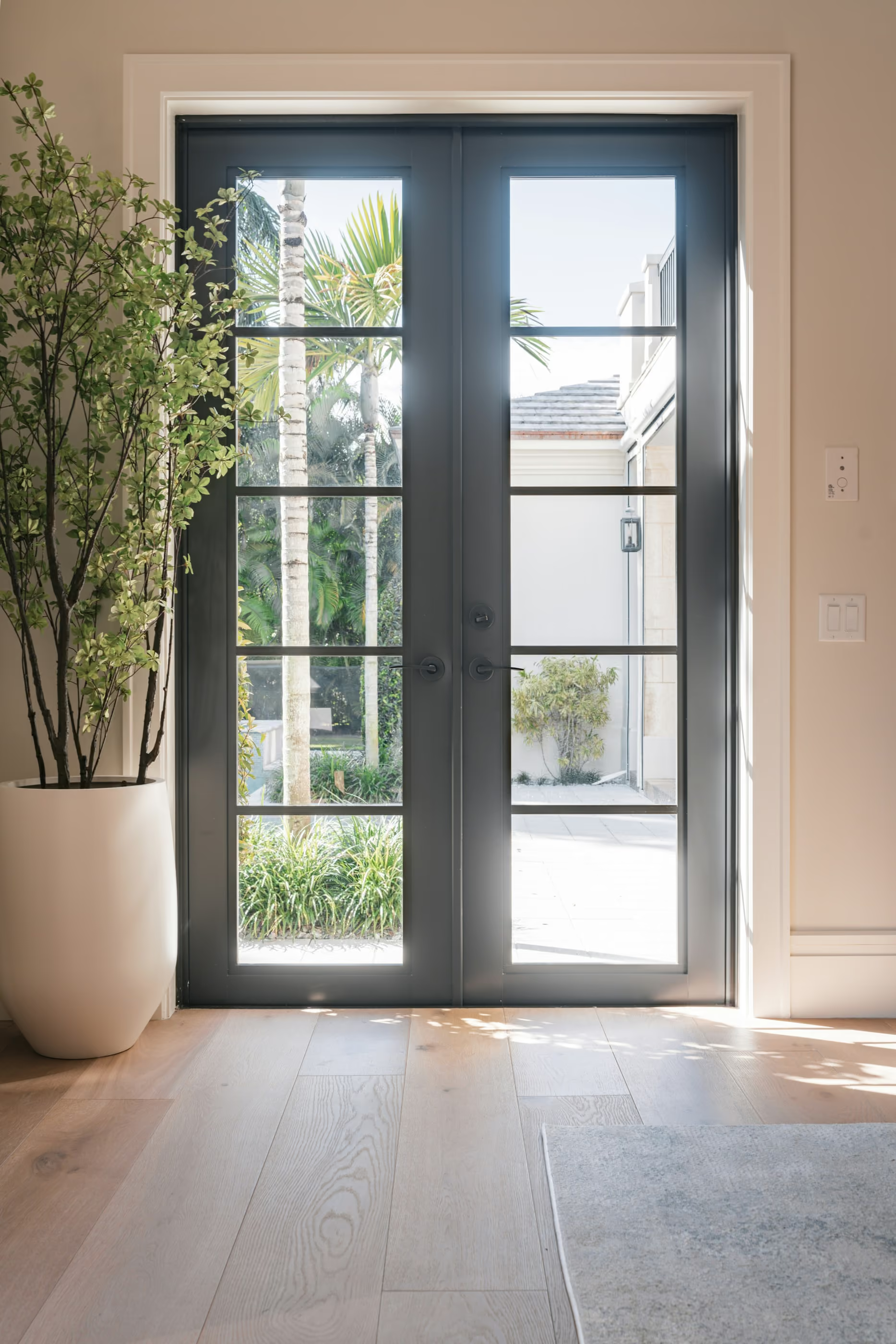
A multi-point lock bolts the door at several spots along its edge, not just at the latch. That spreads the load and holds the door tight to its weatherstrip. Jada and Sun both build this into their swing doors.
Jada says: “Our swing doors come with multi-point locking installed.” On a single door, the lock has the primary spring latch and deadbolt, plus extra points above and below. On door pairs, the inactive door is locked into the head and the sill with concealed flip latching. Its pivot doors use a concealed multi-point system too.
Sun’s in-swing door has a latching system with “three latch points” along the door jamb. The latches engage on their own when you close the door. You turn the lock button inside or use the key outside.
For handles, Jada offers levers and knobs from Rocky Mountain Hardware or Sun Valley Bronze as standard. Bertrand says its entrance door handles can carry LED lighting, fingerprint scanners or digital peepholes, and its door fillers can take intercoms.
Honey Rock does not publish a security rating for any door. Ask the manufacturer for tested numbers and keep them in your file.
What should I know about sills and thresholds?
The sill is where a door fails first in rain. Plan it before you choose the style. An inswing door and a pivot door both close onto a raised threshold. An outswing door closes onto a lower step that works as a water dam.
Jada puts the issue plainly. It says inswing doors are “difficult to weather seal at the sill” and recommends them where the entry has protection from extreme weather. It gives the threshold rise for its inswing steel doors as 3/8 inch above the finished floor. If you plan a throw rug inside, a taller step may be needed.
For an outswing door, Jada says the door closes 1/2 inch below the finished floor. The drop works as a water dam, and a compression weatherstrip adds seal.
For a pivot door, Jada says to use it in covered areas unless special sill drainage is added. It also says the threshold is often stone or part of the hard floor material, and that the sill detail gets worked out in the shop drawing process. Read more about the sill and the jamb in the glossary.
How does Texas sun affect an entry door?
Texas sun heats a door, fades a finish and warms the rooms behind it. A west face takes the hardest afternoon sun. Choose glass with low solar heat gain and a finish that holds up in heat.
The National Weather Service reports that the average date of the first 100°F day at DFW Airport is July 1, and the average date of the last is August 27. That is a long season of direct sun on a west door.
The U.S. Department of Energy says low solar gain products, those with an SHGC below 0.4, are designed for hot climates. Read SHGC and U-factor for Texas for a full explanation. See SHGC and Low-E coating in the glossary.
Brand data helps you compare:
| Maker | Published glass or rating | What it tells you |
|---|---|---|
| Jada | NFRC sample ratings for an outswing door: U-factor 0.33 and SHGC 0.31 with clear glass; U-factor 0.31 and SHGC 0.27 with IS20 glass and simulated divided lites | Values depend on glass and lite type. Always confirm the exact unit. |
| Sun | Sun Advantage 270 Low-E² glass “permits 70% of the sun’s visible light”; 366 Low-E³ permits 66% | More coatings cut more heat and a little more light. |
| Bertrand | Entrance doors described as “designed to provide excellent thermal insulation” | No door number published on that page. Ask for NFRC data. |
Jada’s values are samples from a unit with 1/4 inch over 1/4 inch glass, a Technoform TGI spacer and argon fill. Your door will carry its own label. Read how to read an NFRC label and see the energy-efficient windows pillar for the full picture.
What does the process look like with Honey Rock?
Honey Rock describes its work as running “from the initial design process to the final installation.” The company is at 2020 Farrington Street, Dallas, TX 75207, and you can reach it at (214) 484-9982. Start with the opening and the look, and confirm the rest in writing.
A typical order for a custom entry door follows these steps:
- Measure the opening and note the exposure, cover and floor finish.
- Choose the door type, material and glass.
- Choose the locks, handles and finish.
- Review shop drawings, including the sill and threshold detail.
- Confirm lead time and delivery.
- Install, then check weatherstrip contact and lock operation.
Read planning a window and door project for the full sequence, and rough opening vs frame size before you order.
What should I ask before I order an entry door?
Ask for facts you can check. Get the glass, hardware, sill and schedule in writing. Ask what the maker publishes and what it does not. Several makers leave out sizes, ratings or warranties on their public pages.
- What is the door’s maximum size in my configuration? (Jada publishes no maximum door sizes on its pages. Bertrand lists maximum sizes only for some systems.)
- What is the NFRC U-factor and SHGC for my exact glass and lite pattern?
- What is the sill and threshold height, and how does it work with my floor?
- How does the door meet my covered or exposed entry? Is a pivot door allowed there?
- What locks and handle sets come standard, and what is extra?
- What is the finish, and what is the maintenance on a west face?
- What does the maker warrant for this product line?
For a Dallas Landmark home or a conservation district, add one more question: does the door need approval first? Read windows in Dallas historic districts.
Next step
Tell Honey Rock about your opening, your exposure and the look you want. Start with the custom entry doors page and our doors overview, then start your project or call (214) 484-9982.
Questions people ask
Should a front door swing in or out?
Most entry doors swing in, and Jada says virtually all of them do. An inswing door is harder to seal at the sill, so it suits covered entries. An outswing door seals tighter as wind rises, but it needs clear space outside and a plan for the hinges.
Can a pivot door be a front door?
Yes, if the entry is covered. Jada says pivot doors should only be used in covered areas with limited exposure unless special sill drainage is added. The floor pivot holds the door and acts as a hydraulic closer. Plan the threshold and swing clearance early.
What materials can a custom entry door use?
Through Honey Rock's partners you can choose thermally broken steel from Jada, steel, aluminum, wood or PVC from Bertrand, and clad wood from Sun Windows. Each has trade-offs in weight, sightline, maintenance and look. Pick the material after you pick the door type.
How do I get privacy with a glass entry door?
Ask for solid panel inserts, obscure or frosted glass, or a solid door with a narrow sidelite. Sun lists solid panel insert options next to its full glass panels. Decide privacy by room: a door that opens to a hall needs less cover than one that opens to a living room.
Does a west-facing front door need special glass?
Yes. West faces take the hottest afternoon sun in Dallas. DOE says low-gain glass is designed for hot climates. Ask for the unit's solar heat gain coefficient on the NFRC label, and weigh it against how much daylight you want.
How long does a custom entry door take to order?
Honey Rock publishes no lead times. Bertrand says its aluminum constructions are made in 7 to 8 weeks, but that is the maker's figure, not a delivery date to your site. Ask for the full schedule, with shop drawings and shipping, in writing before you commit.
Terms on this page
Sources
- Jada Windows: Swing products
- Jada Windows: Steel Inswing Doors
- Jada Windows: Steel Inswing Doors (sill)
- Jada Windows: Steel Inswing Doors (locking)
- Jada Windows: Steel Outswing Doors
- Jada Windows: Thermally-broken Steel Pivot Doors
- Jada Windows: Pivot Doors (floor pivot)
- Jada Windows: Pivot Doors (locking)
- Jada Windows: Hardware
- Jada Windows: Energy Values (NFRC sample ratings)
- Bertrand: Entrance Doors
- Bertrand: Entrance Doors (handles and access)
- Bertrand: Entrance Doors (Ultra Slim)
- Bertrand: MB-100GFT
- Bertrand: COR Pivot
- Bertrand: COR Pivot (smart access)
- Sun Windows: Hinged and Swinging Doors
- Sun Windows: Clad Wood In-Swing Door
- Sun Windows: Clad Wood In-Swing Door (panels)
- Sun Windows: Insulated Glass
- Sun Windows: 270 Low-E Glass
- Sun Windows: 366 Low-E Glass
- U.S. Department of Energy: Purchasing Energy-Efficient Residential Windows, Doors, and Skylights
- NWS Fort Worth: DFW 100 Degree Day Summary
- Jada Windows: Swing products (profiles)
- Jada Windows: Steel Outswing Doors (sill)
- Jada Windows: Steel Inswing Doors (threshold)
- Bertrand: FAQ
- Sun Windows: Insulated Glass (obscure)
- Jada Windows: Finish
- Jada Windows: Thermal Design
Written by Honey Rock Window and Door and checked against the sources above on November 5, 2026. Product specifications and city rules change, so check the linked page before you act.